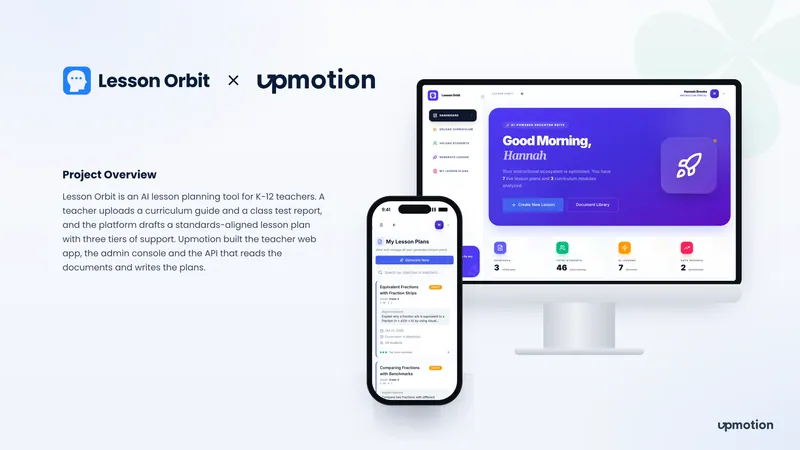
AI lesson planning tool
Lesson Orbit
An AI lesson planner for K-12 teachers. A teacher uploads a curriculum guide and a class test report, and it drafts a standards-aligned lesson plan with three tiers of support.
Platforms: Web App, Admin Dashboard
Art gallery website and CRM
An art gallery website and staff CRM for a Lahore gallery, running artworks, exhibitions, sales, catalogs and staff from one data source.
Muse Art Galleries website
01 Overview
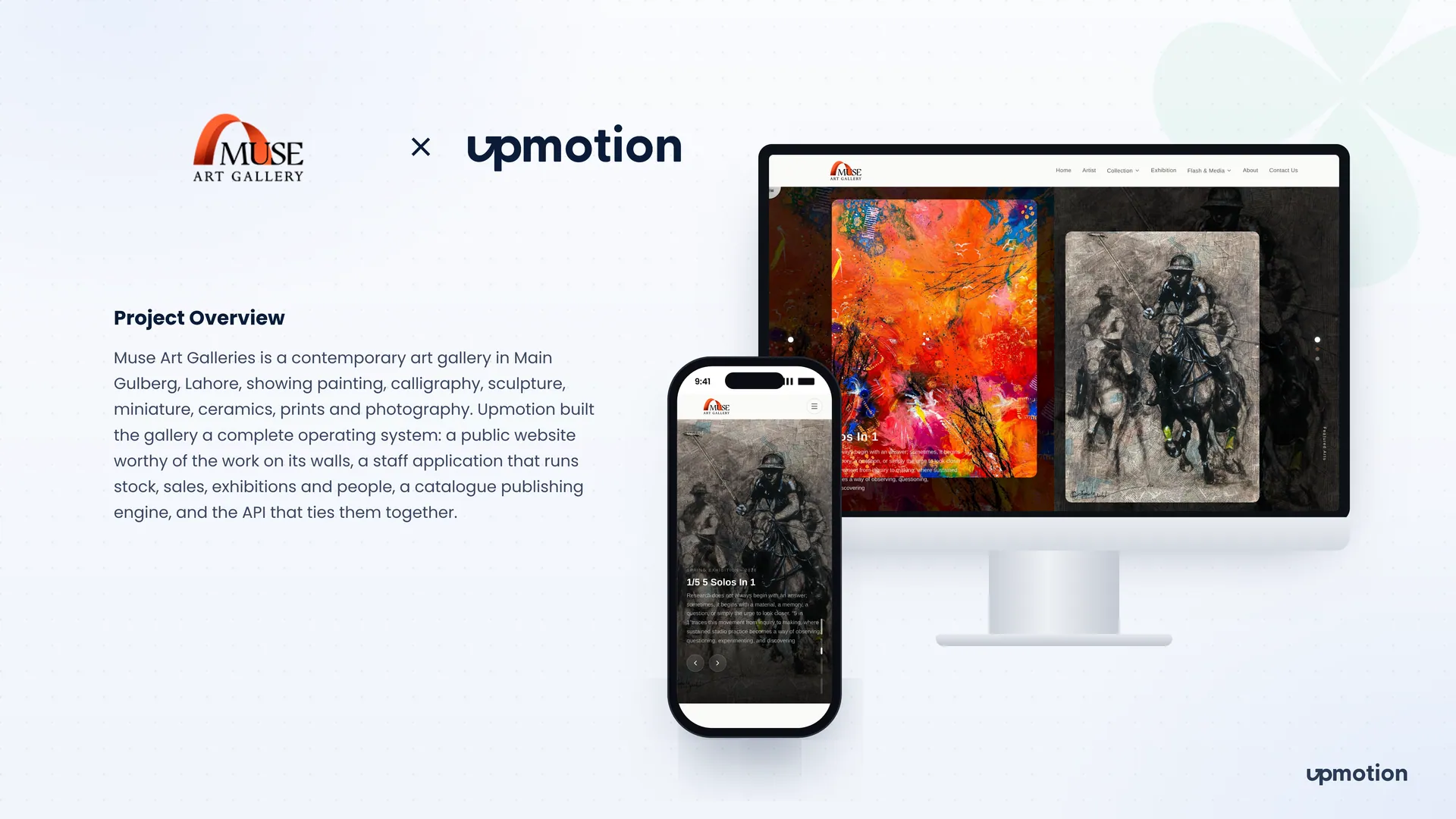
Muse Art Galleries is a contemporary art gallery in Main Gulberg, Lahore, showing painting, calligraphy, sculpture, miniature, ceramics, prints and photography. The gallery needed an art gallery website worthy of the work on its walls and a back office to run the business behind it.
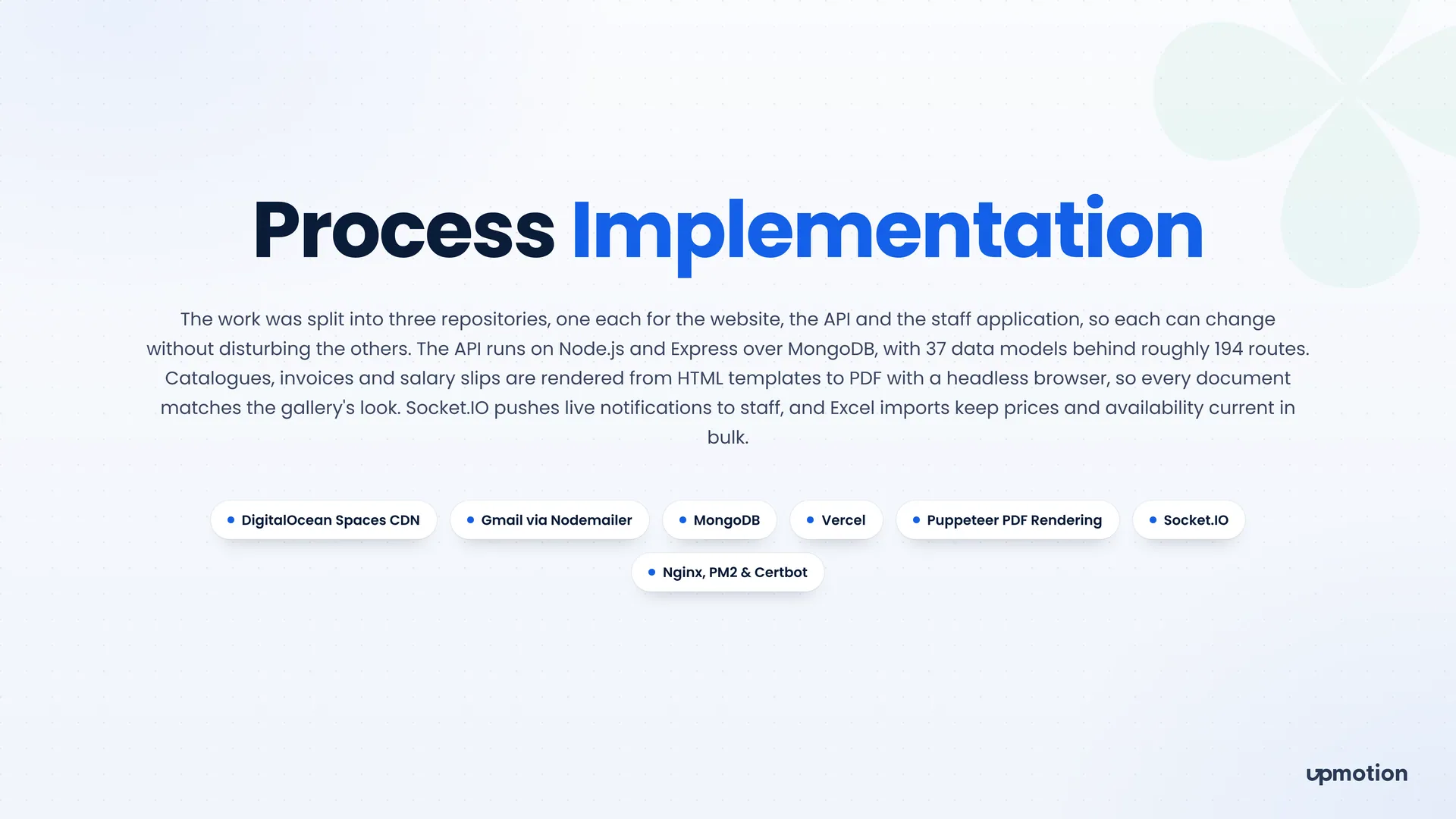
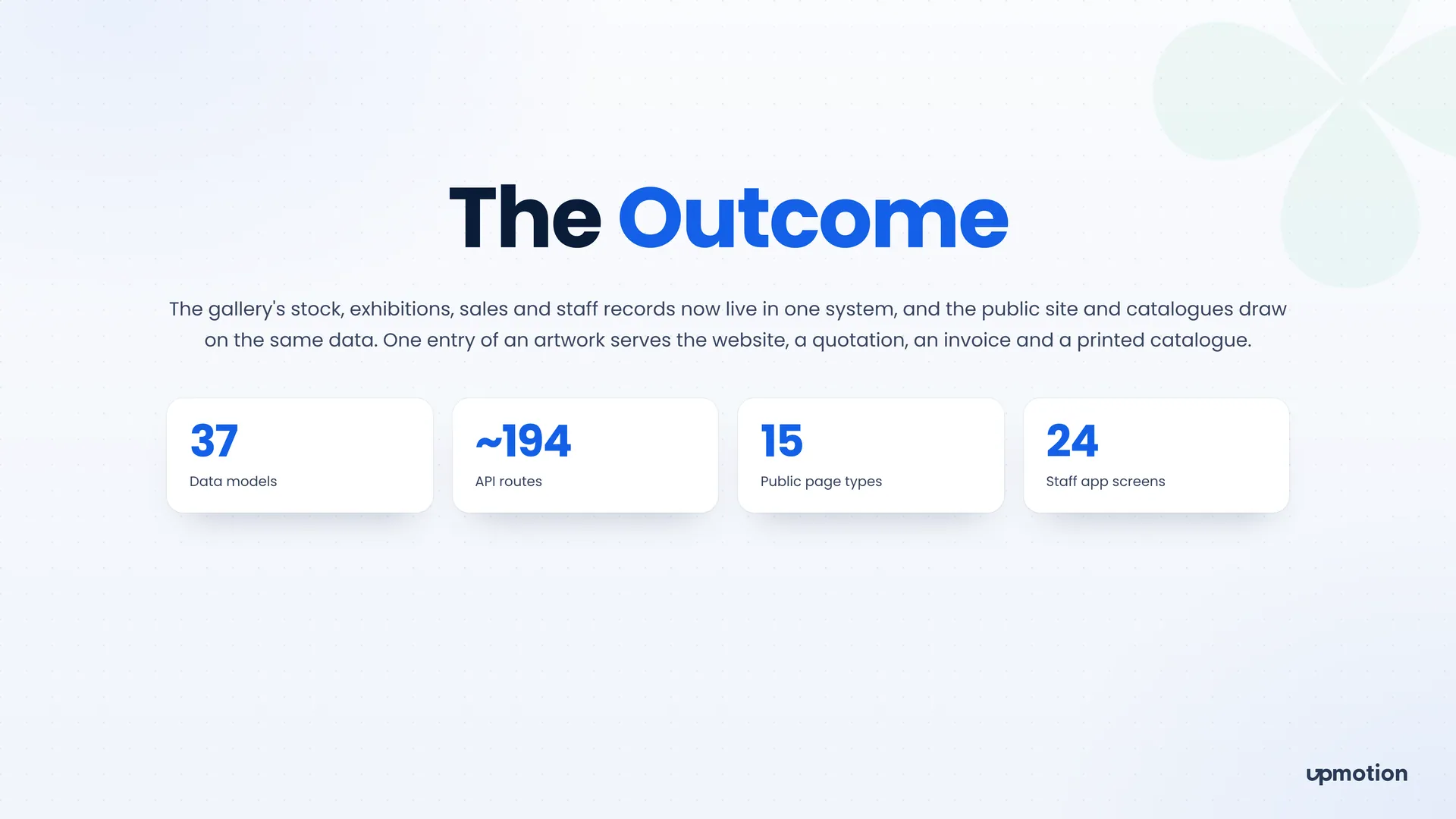
We built the gallery a complete operating system: a public website, a staff application for stock, sales, exhibitions and people, a catalog publishing engine, and the API that ties them together. Every part reads from the same data, so an artwork is entered once and used everywhere.
02 The challenge
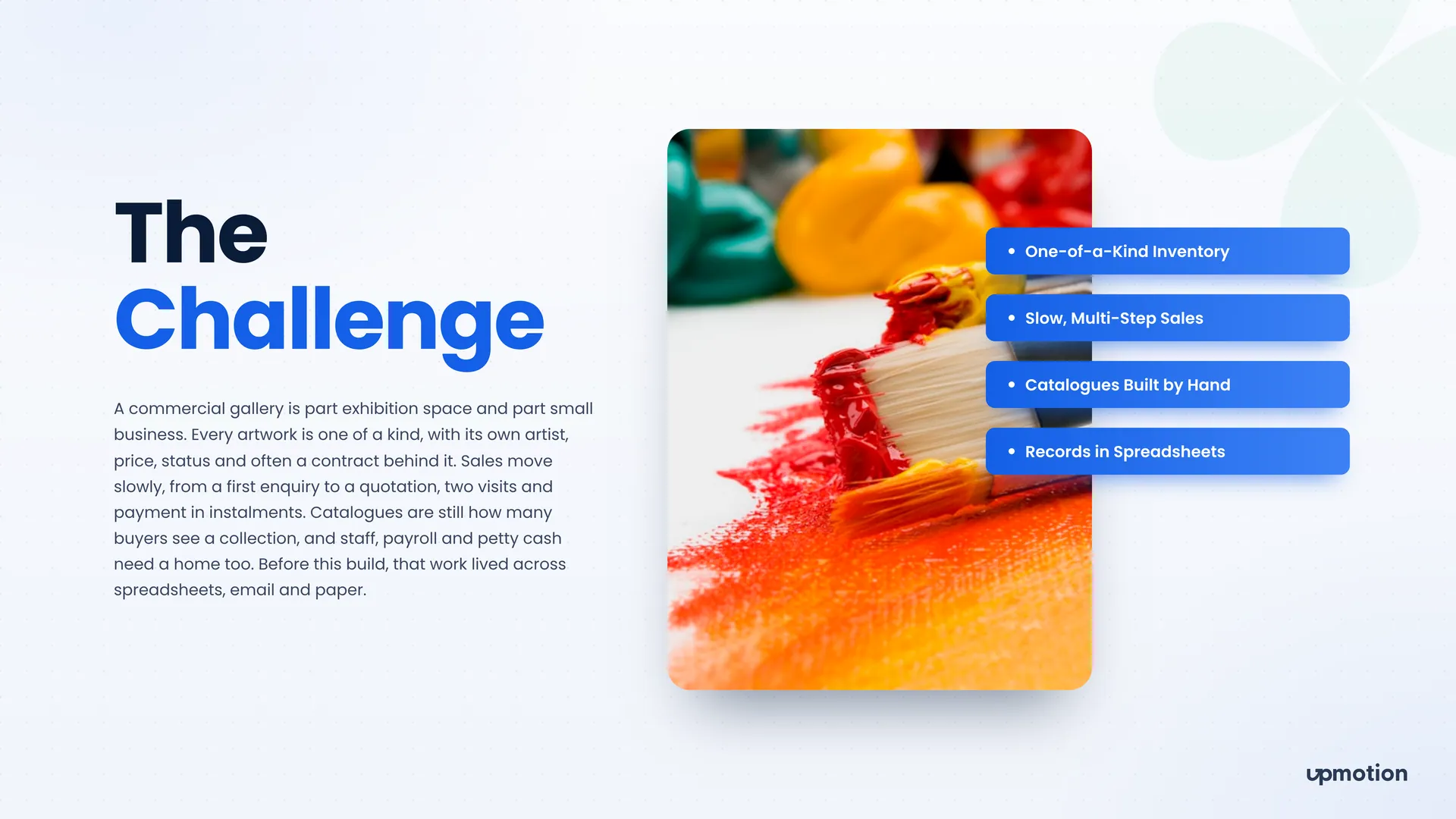
A commercial gallery is part exhibition space and part small business, and before this build its work lived across spreadsheets, email and paper.
Every artwork is one of a kind, with its own artist, price, status and often a contract behind it.
Sales move slowly, from a first inquiry to a quotation, two visits and payment in installments.
Catalogs are still how many buyers see a collection, and they were built by hand.
Staff records, payroll and petty cash had no proper home.
03 What we built
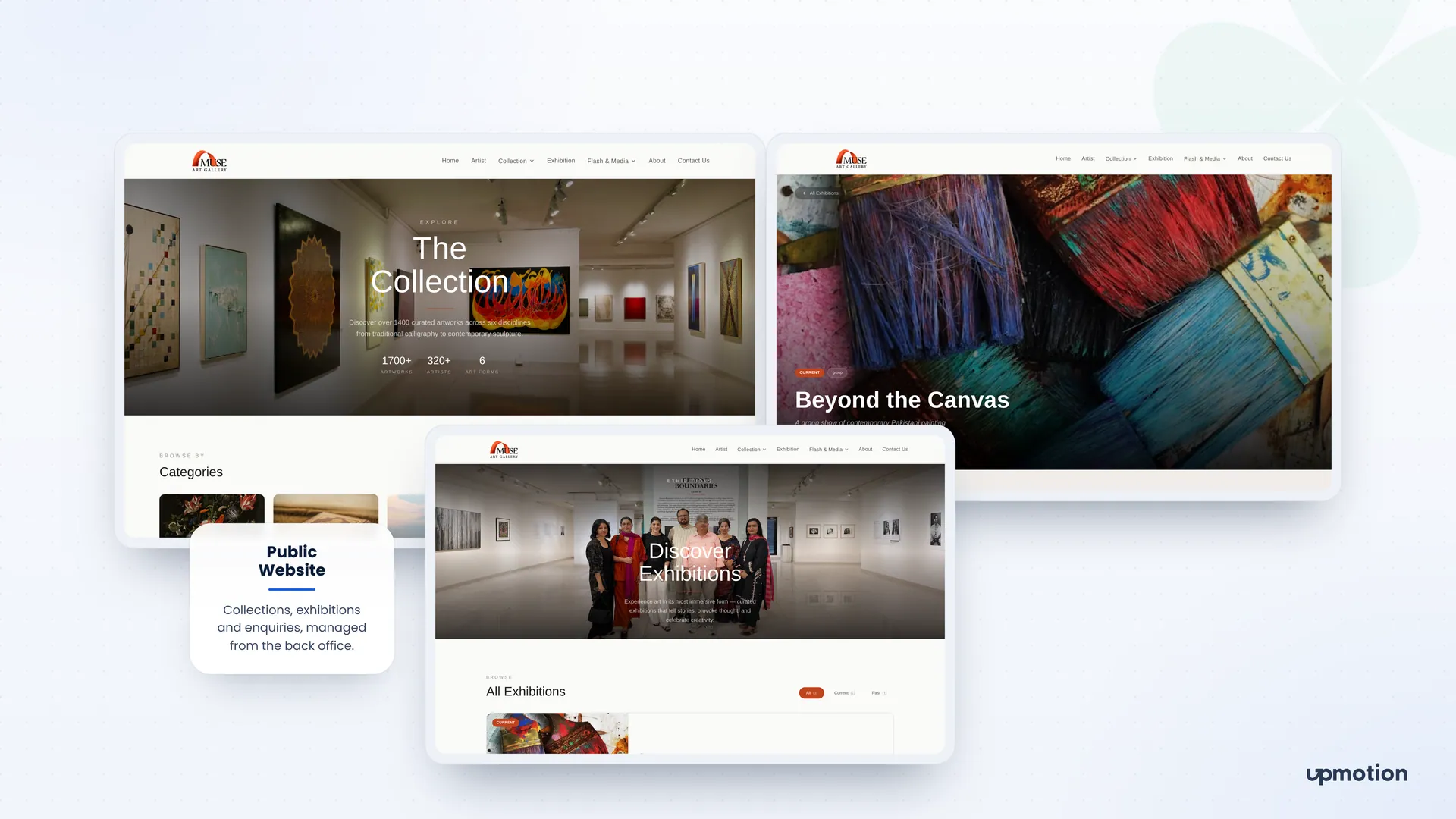
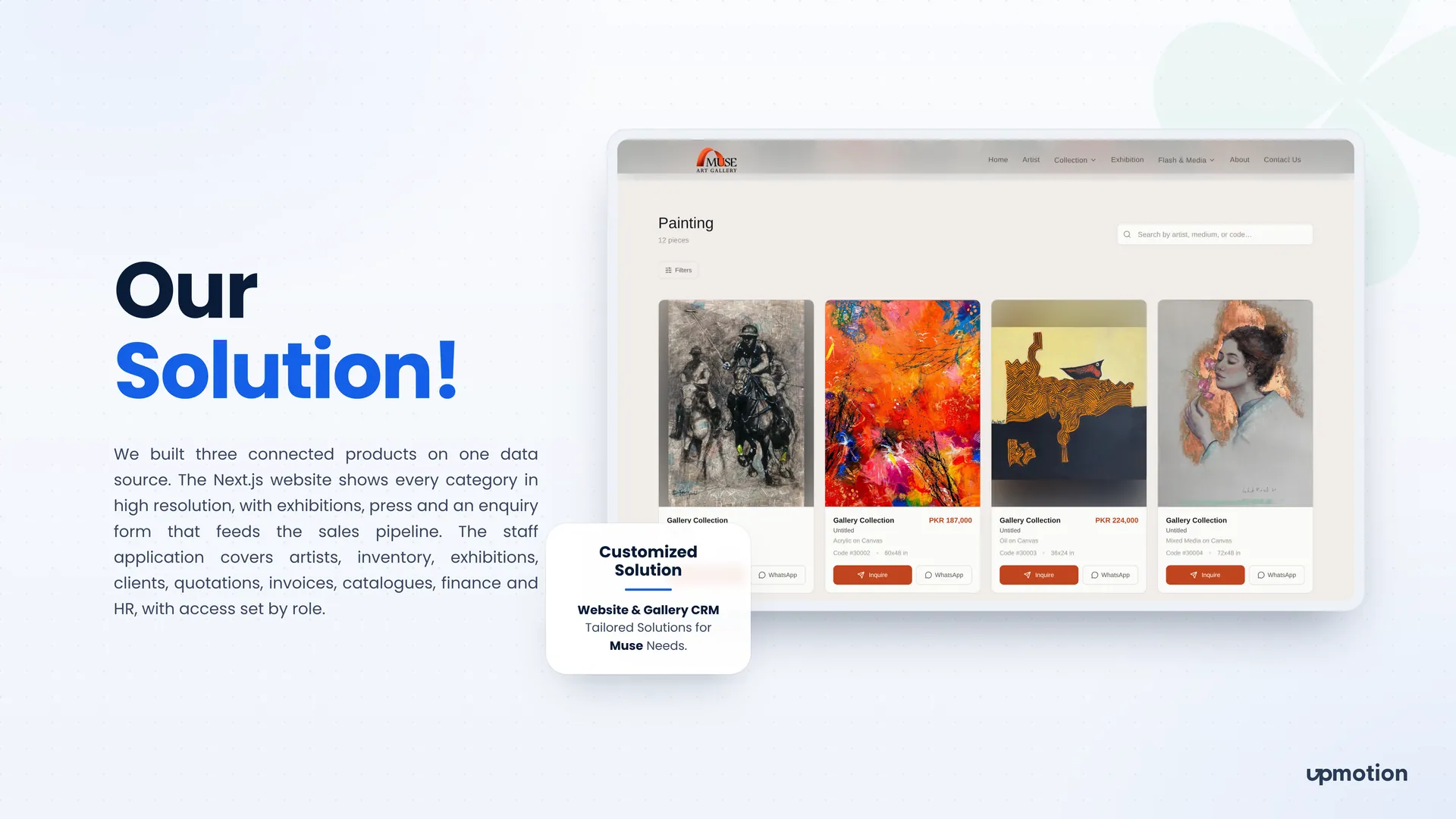
We built three connected products on one data source: a Next.js public website, a role-based staff CRM and a Node.js API.
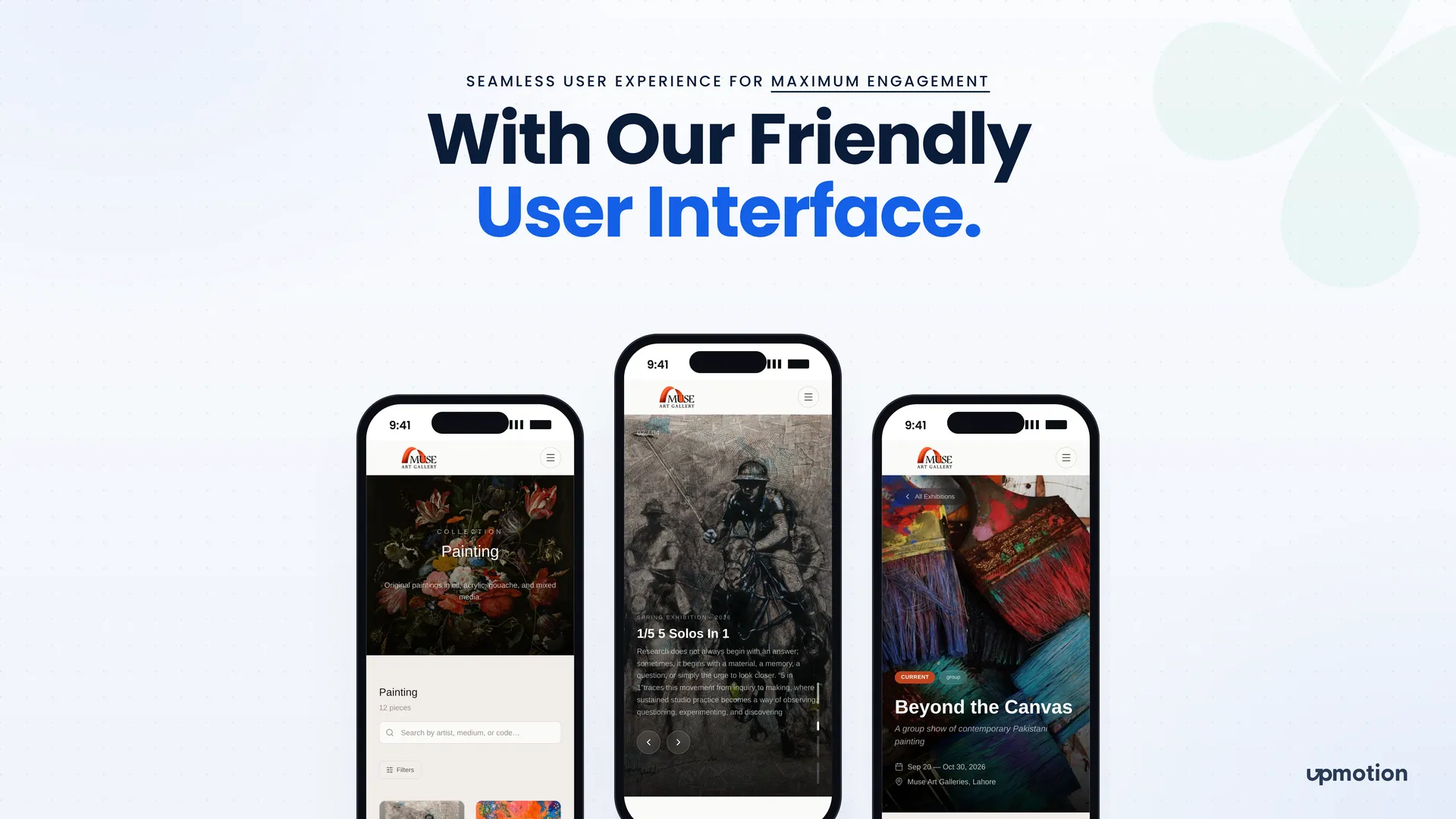
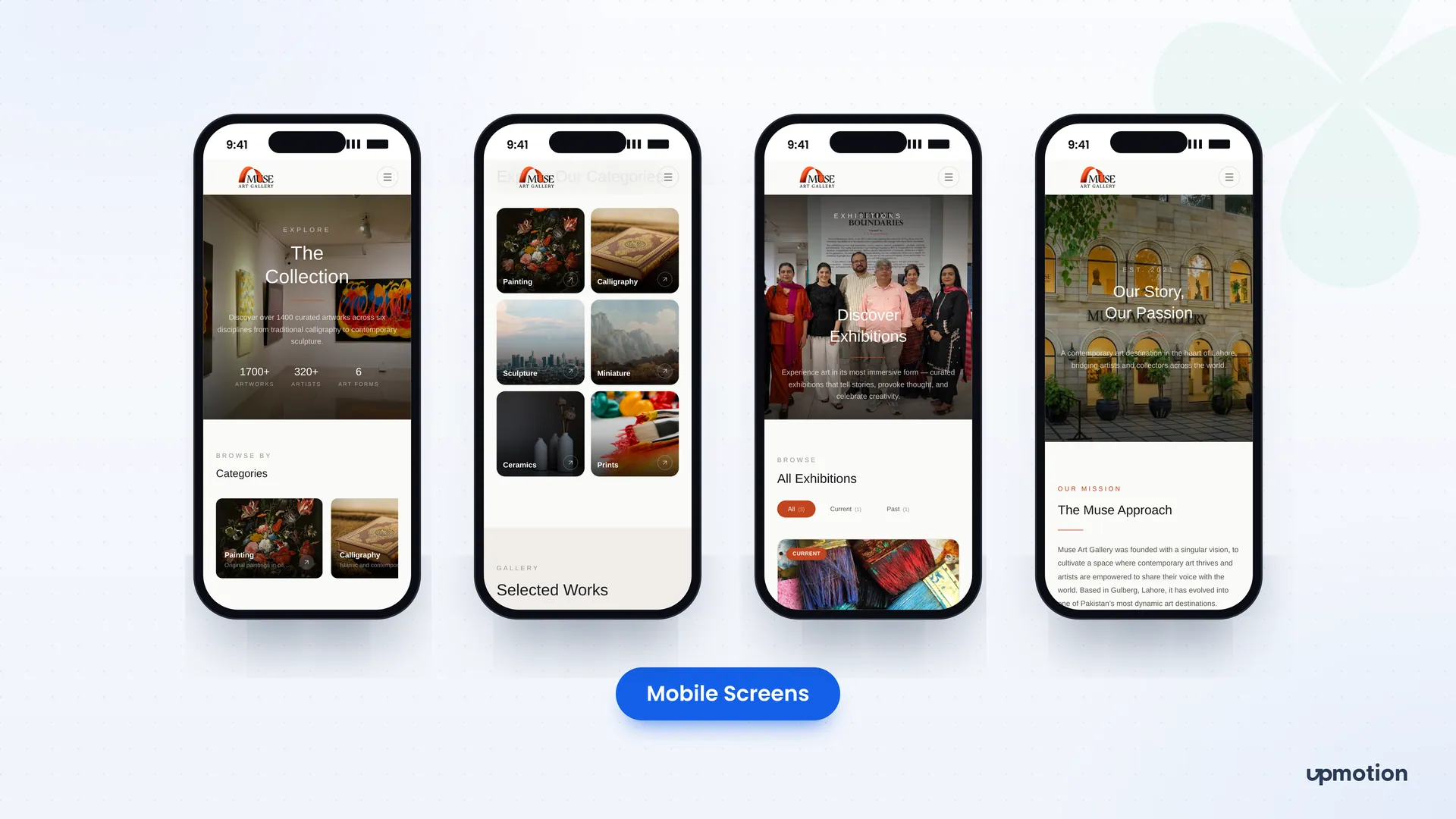
The website shows every category, from painting to ceramics, in high resolution. Visitors can search by artist, medium or code and filter the collection.
Each artwork has Inquire and WhatsApp buttons, and the inquiry form feeds straight into the staff sales pipeline. No lead gets lost in an inbox.
Current and past exhibitions get their own pages with dates, location and descriptions, all managed from the back office.
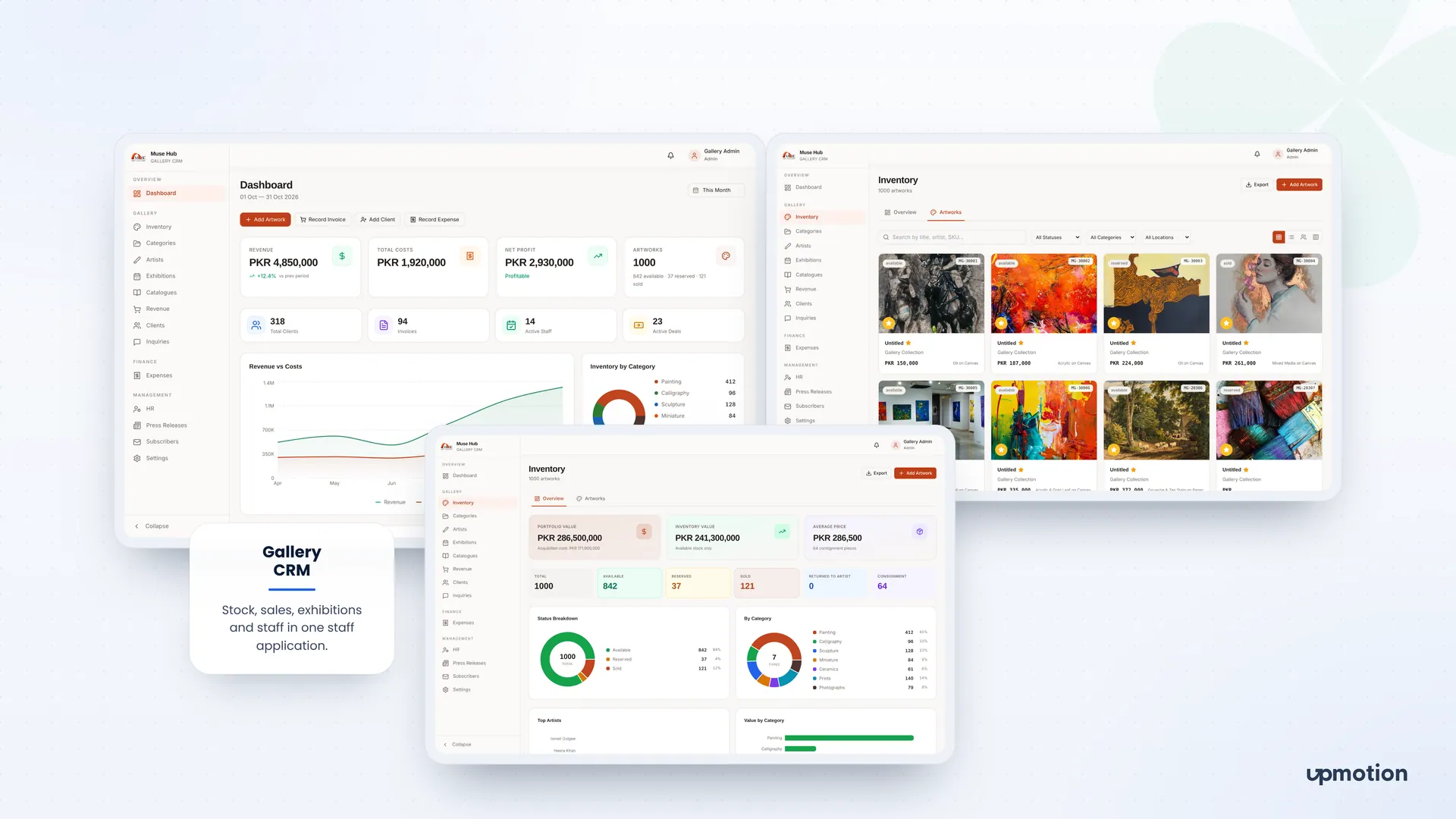
Staff track every piece as available, reserved, sold, returned to artist or on consignment, with portfolio value and breakdowns by category and artist.
Staff move a sale from inquiry to quotation to invoice inside the CRM, and the dashboard shows revenue, costs and net profit.
Catalogs, invoices and salary slips are rendered from HTML templates to PDF with Puppeteer. Every document matches the gallery's look without manual layout work.
Expenses, staff records and payroll live in the same application, with access set by role.
Excel imports keep prices and availability current in bulk, and Socket.IO pushes live notifications to staff.
04 The results
The gallery's stock, exhibitions, sales and staff records now live in one system.
AI lesson planning tool
An AI lesson planner for K-12 teachers. A teacher uploads a curriculum guide and a class test report, and it drafts a standards-aligned lesson plan with three tiers of support.
Platforms: Web App, Admin Dashboard
Travel discovery platform
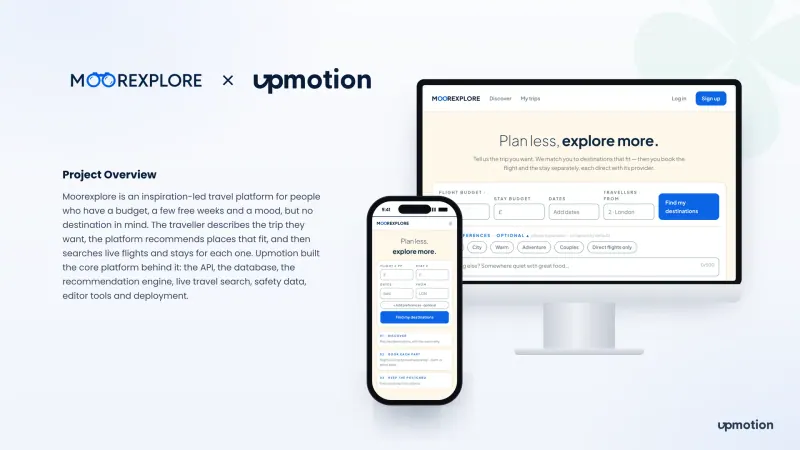
A travel discovery platform for people with a budget and free dates but no destination. It recommends places that fit, then searches live flights and stays.
Platforms: Web App
Football film study platform
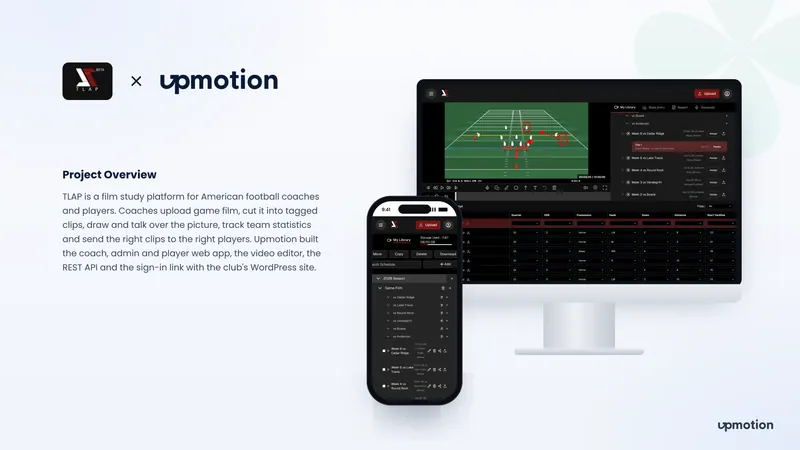
A film study platform for American football coaches and players. Coaches cut game film into tagged clips, draw and talk over plays, track team stats and send each player the clips meant for them.
Platforms: Web App, Admin Dashboard